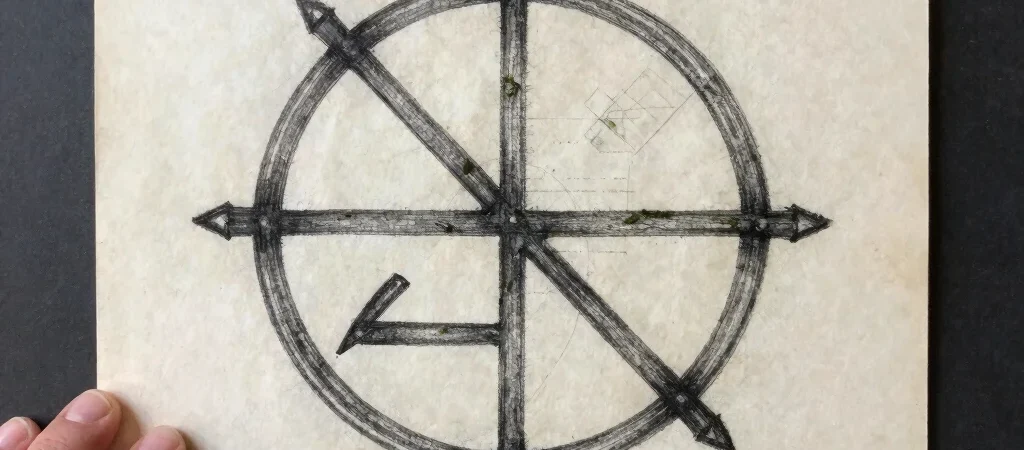
A blank page can make sigil-making feel like a test of artistic talent. It is more useful to treat it as an exercise in editing: begin with an intention you can state plainly, then shape a mark from the words and forms that matter to you. The symbol is made; the choices behind it are part of the practice.
Write a workable sentence
Choose a statement that describes your own attention or conduct, rather than trying to control another person or guarantee an outcome. “I make room for steady study” gives you something concrete to consider; a vague wish for everything to change does not. Keep the sentence private if that helps you write without performing for an imagined audience.
Edit before drawing
One familiar method is to remove repeated letters from the sentence and work with what remains. You can combine those letterforms, simplify them, or set the method aside if another approach feels more coherent. There is no need to claim that one procedure is universal; the point is to make your design decisions visible to yourself.
Let the mark become yours
Draw several versions in pencil before choosing one. Pay attention to balance, negative space, and whether the mark still feels connected to the sentence that began it. A small change—a crossing line, an open curve, a deliberate gap—can carry more meaning for you than added complexity.
Keep the sentence and a note about your choices beside the finished drawing. That record turns a striking shape into a piece of symbol-making you can revisit and understand. The result need not promise an outcome; it can serve as a precise reminder of the intention you chose to put into form.