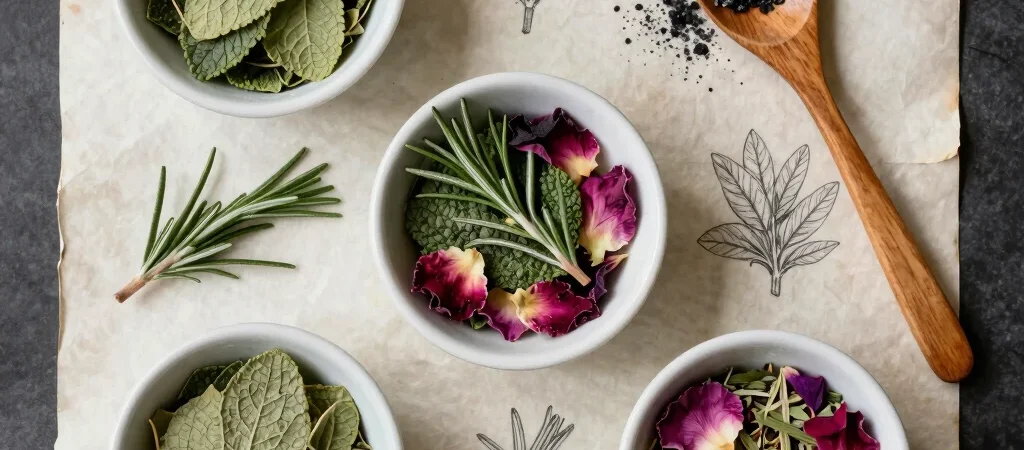
A jar of dried herbs can suggest endless combinations, but adding more plants does not automatically make a better blend. Start with one clear note you want to notice—a familiar minty freshness, a soft floral aroma, or the green scent of rosemary. From there, build a small composition rather than asking the ingredients to do too many things at once.
Choose a leading botanical
Begin with ingredients you can identify and describe. Peppermint has a distinct, cooling aroma; rosemary is more resinous and savory, while dried rose petals bring a delicate floral character. These are sensory descriptions, not promises of a particular effect.
Add support, not clutter
Choose one or two supporting botanicals, then make a small trial blend before preparing more. Crush a pinch between your fingers to compare the aromas, or steep a food-grade sample according to the ingredient’s usual preparation guidance. If one plant overwhelms the others, reduce it instead of adding more ingredients to cover it.
Keep the practice grounded
Write down the plant names, source, and proportions so you can understand what you made later. Use only botanicals you have positively identified and that are intended for your chosen use; a plant suitable for a decorative sachet is not automatically suitable to eat or drink. Check relevant safety guidance for individual ingredients, especially if you have allergies, take medication, or are pregnant.
A herbal blend can be an exercise in attention: noticing aroma, texture, and how a few materials sit beside one another. Keep the recipe simple enough to remember, and let the plants remain plants rather than attaching claims they cannot support. One clear note, carefully chosen, is often where a blend finds its character.