Traditional herbal blends rest on a simple principle: each ingredient is chosen for its texture, aroma, and role in the mixture. Here we look at formulation through the plant itself, before any question of use.
A blend is usually organized in three tiers. The base supplies bulk and a steady burn, the modifier shapes texture and moisture, and the accent carries the aroma that gives the mixture its character.
Base herbs
The base is the body of the blend. Its leaves are chosen for even drying and a neutral, steady character that holds the rest together.
Astringent modifiers
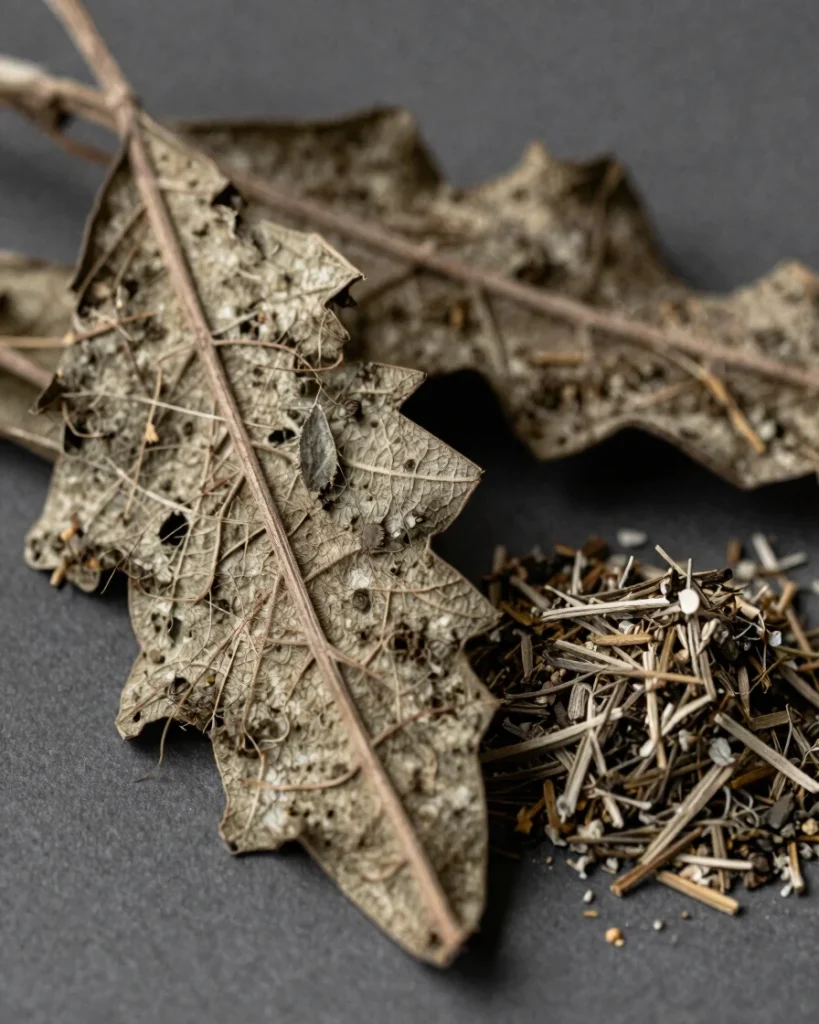
Modifiers adjust texture and moisture. Their fibrous, slightly bitter leaves shape how the blend dries and how evenly it sits in the hand.
Aromatic accents
Accents are used in small measures. Their volatile oils carry the scent, so they are added sparingly and noted separately in any written ratio.
Botanical profiles
Mullein, mugwort, damiana
Mullein is prepared as soft, airy leaf that dries best in moderate humidity. Mugwort is sharper and more resinous, so it is often kept to a smaller share. Damiana carries a sweet, floral note and benefits from slow drying away from direct heat.
Drying humidity and sensory notes change from season to season. Recording them in a plain ledger keeps each batch legible for later comparison.